
Case study / HeliosX / AI product architecture
Building the MedExpress AI design memory and acquisition workflow
I turned scattered MedExpress UK product truth into a reusable design operating layer: a Markdown knowledge base, Leo assistant bundle, 60-component rebrand registry, analytics evidence layer, and prototype quality gate that let AI-assisted work move faster without losing brand, clinical, compliance, or customer context.
The problem
MedExpress needed a reliable design memory before AI could help.
MedExpress UK is the largest brand inside HeliosX, a regulated online pharmacy and telehealth platform. The acquisition funnel handles high-volume GLP-1 weight-loss journeys across marketing, product pages, consultation, checkout, verification, clinical review, and retention.
When I started, the design work had no reliable memory. Research findings lived in Slack, brand rules lived across old source material, Figma and code disagreed, analytics questions had competing answers, and AI tools generated plausible screens that ignored MedExpress-specific brand and compliance constraints.
The product-design challenge was to build the missing operating layer: give designers and AI tools the same source hierarchy, expose what each output relied on, and create review gates strong enough that speed did not become risk.
What shipped
I turned scattered product truth into a reusable operating layer.
The result was a working layer the team could use every day: source material, interface references, generated bundles, quality gates, and the evidence behind them. The visuals below combine shipped screenshots with shareable summaries so the system is visible without exposing private material.
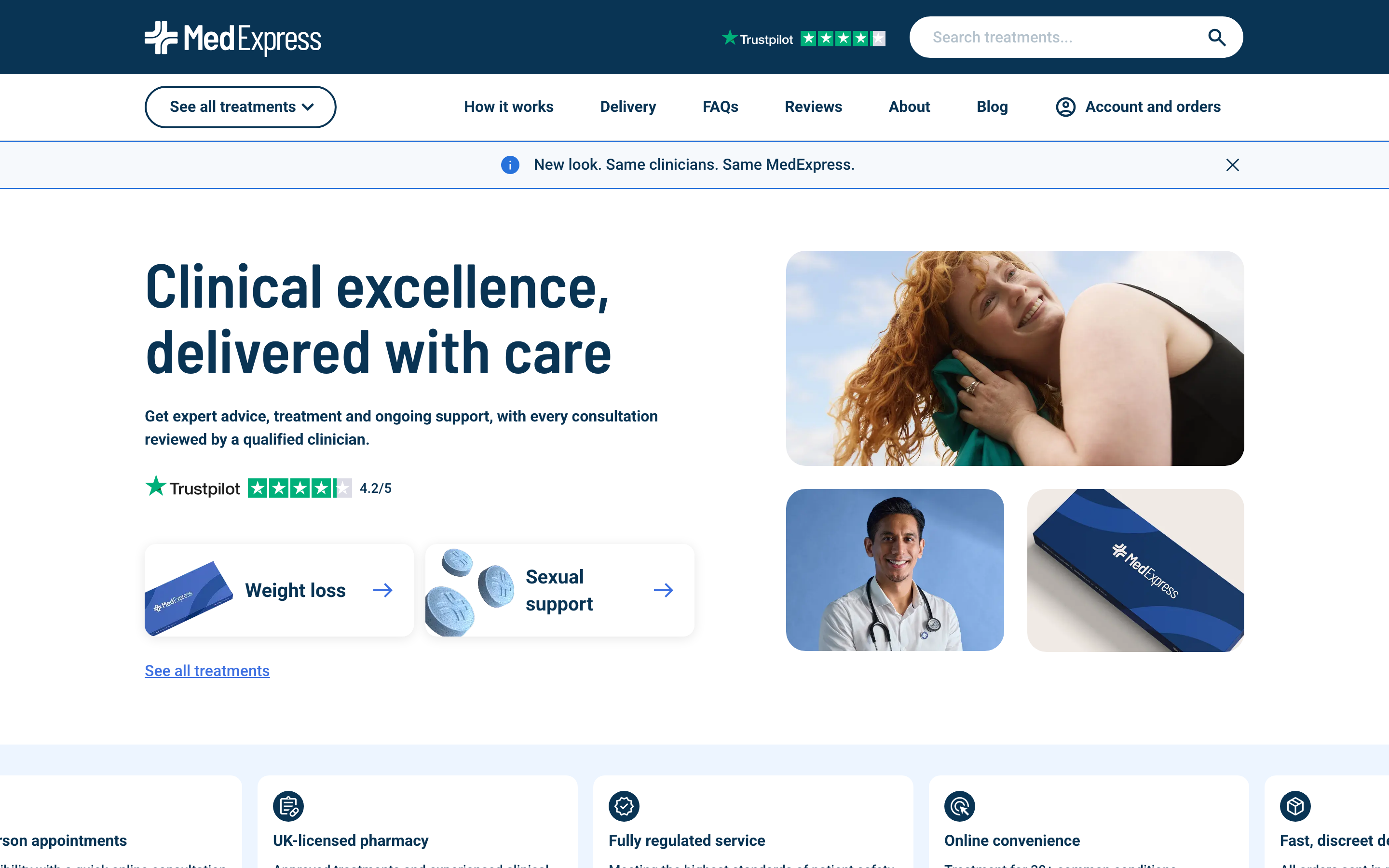
- Hierarchy Treatment cards, clinical proof, and primary route stay readable as product structure, not decoration.
- Fidelity HTML/CSS recreation let AI agents inspect spacing, colour, type, and component shape directly.
- Boundary The screenshot is shareable and avoids private analytics, customer data, and internal tooling.
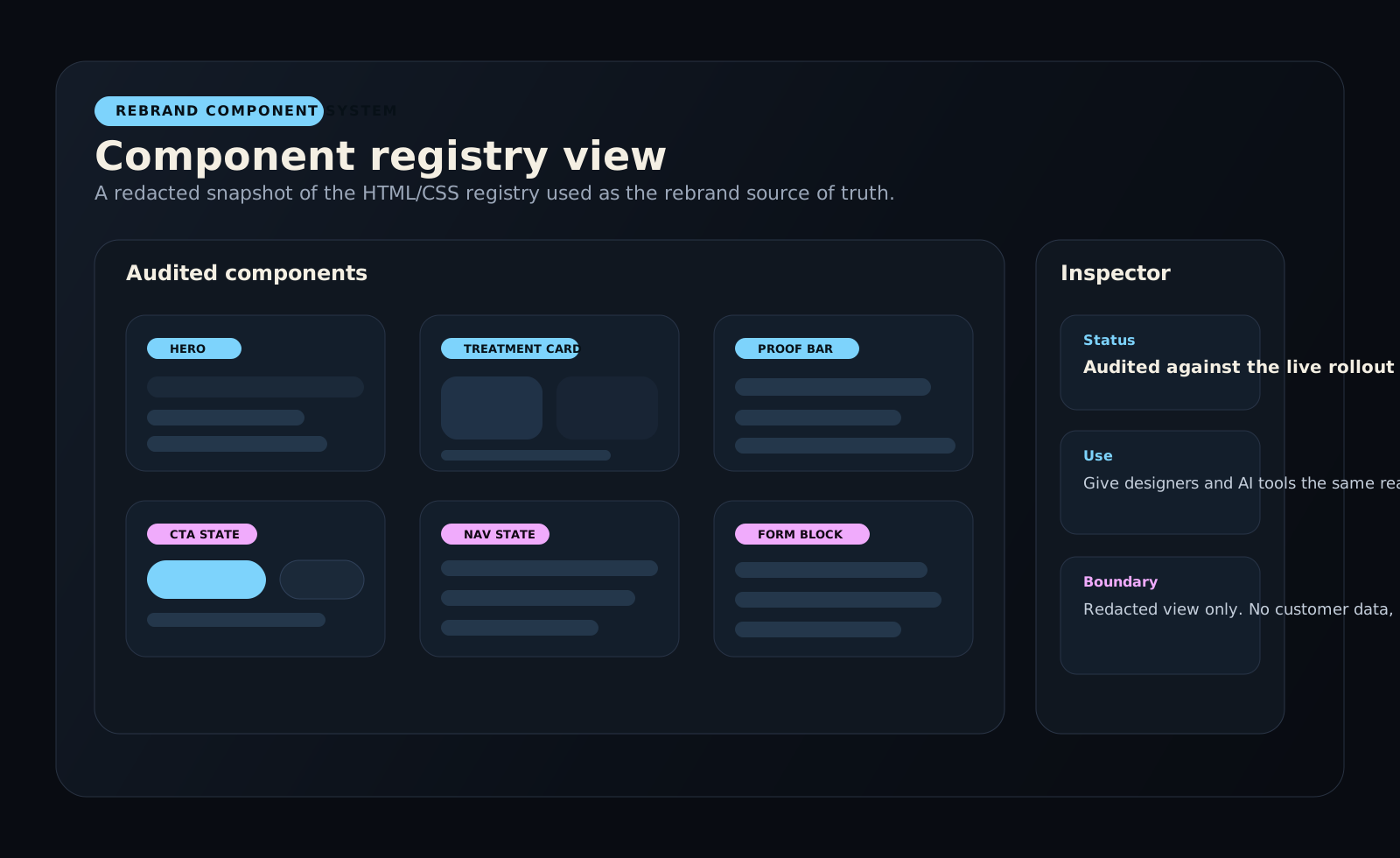
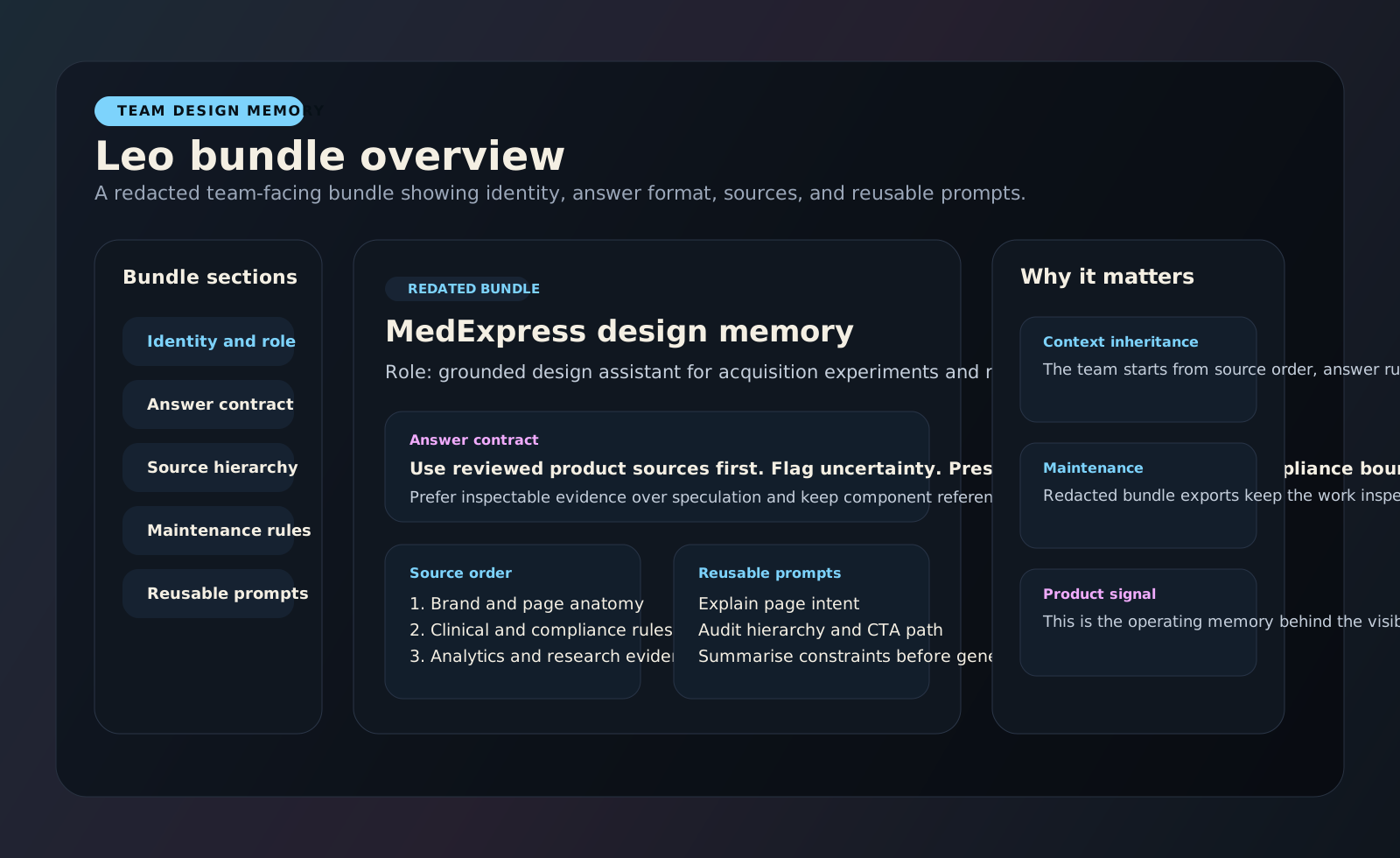
Markdown stayed canonical.
Human-readable source files won over hidden prompt context, so designers, PMs, writers, and agents could inspect the same material.
Visual source before generation.
The rebrand registry gave AI tools a concrete interface reference before they were asked to propose new screens.
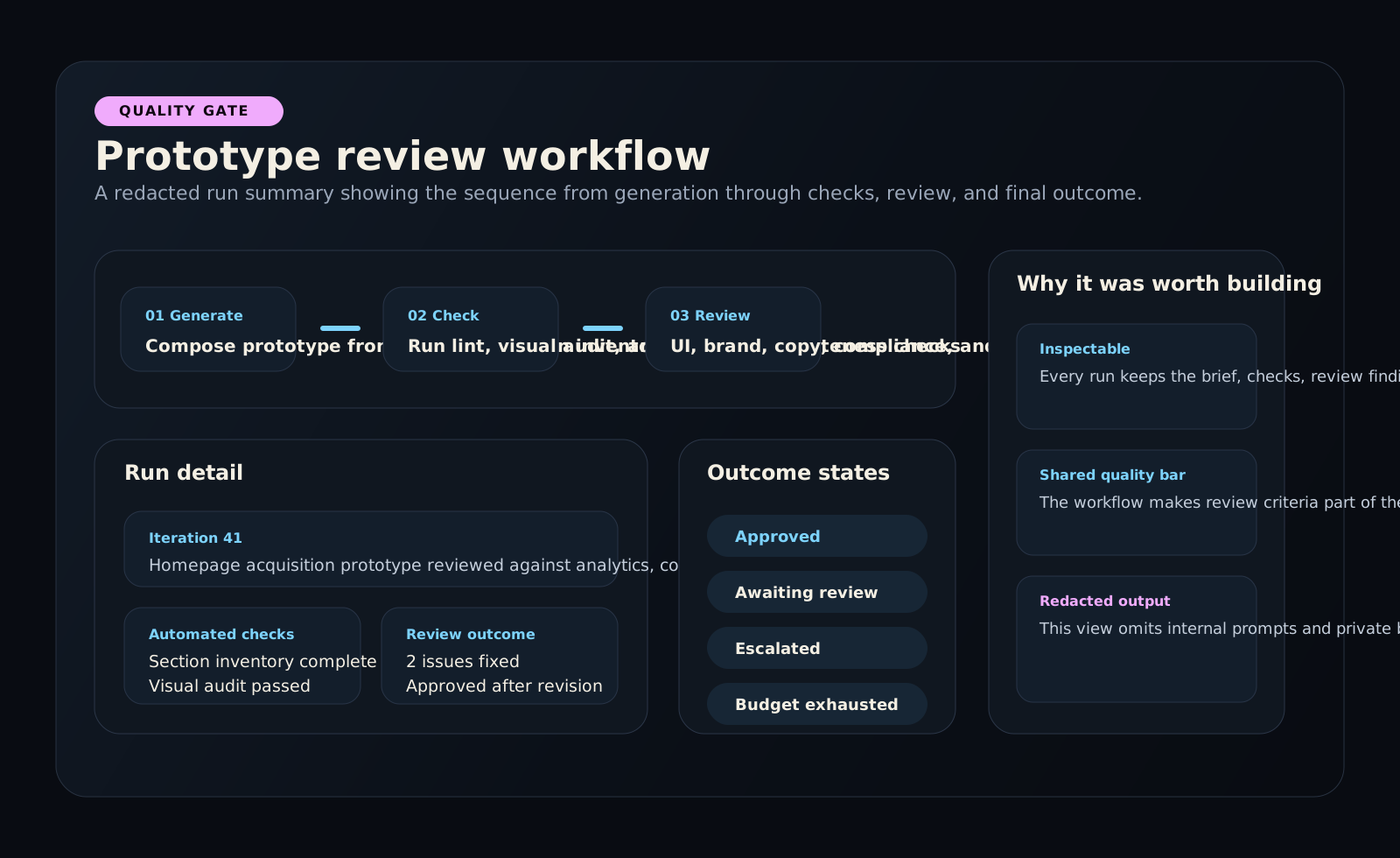
Each part of the workflow had a clear role.
Generation, review, automated checks, and coordination were separated so no single model could declare the work finished alone.
Clear outcomes mattered.
Approved, awaiting review, escalated, and budget exhausted made quality a workflow outcome rather than a matter of taste.
My contribution
I owned the source model, review logic, and quality bar.
My work was the layer before the screen: decide what counted as product truth, make it readable by the team and the tools, define what the model could and could not do, and build the review workflow that made AI-assisted output inspectable.
AI tools helped with implementation and repetitive production, but I set the constraints: source precedence, answer contract, component rules, clinical and compliance boundaries, reviewer roles, and the clear outcome states that stopped the workflow from declaring itself done too early.
Architecture
I split stable knowledge from fast experimentation.
The most important structural decision was separating stable product knowledge from experimental working state. The knowledge base holds brand, clinical, compliance, analytics, flow, component, and customer evidence. The acquisition experiments repo holds hypotheses, prototypes, reviewer outputs, quality-gate state, and plan files.
That split made the work reusable in the same way modern AI design tools use project context or design-system files: stable rules are imported, fast explorations happen in a sandbox, and only reviewed learnings graduate back into the system.
Problem space
Solution space
System 01
The knowledge base became the team's shared memory.
I structured the knowledge base around how a designer reaches for context: overview, design system, pages, flows, components, clinical, compliance, analytics, evaluations, and reports. Every file carries YAML frontmatter, tags, cross-links, and review dates so people and AI systems can discover the same material.
The knowledge base gave MedExpress design a stable ground truth: brand rules, consultation gates, CAP/ASA advertising constraints, GPhC prescribing verification expectations, page anatomy, design principles, and customer evidence became searchable, versioned, and reusable.
The key product-design decision was to make the source layer readable before it was clever. Markdown stayed canonical because designers, PMs, writers, and the supporting tools could all inspect it. Frontmatter gave retrieval enough structure to rank and filter. Generated bundles and indexes were treated as caches, not truth.
Design principle
Markdown became the shared format because it is readable by designers, product managers, writers, and AI tools. JSON was reserved for code-to-code state, not human-authored product knowledge.
System 02
Research and analytics became a usable evidence layer.
I synthesised customer segmentation, JTBD retention research, interview transcripts, weekly UXR insights, Trustpilot data, GA4, Metabase, and Amplitude into usable design artefacts. The output was not a deck; it was a connected evidence layer.
The Q1-Q9 analytics pack reframed several roadmap assumptions. Paid Social underperformance was largely an in-app webview problem. Homepage weight-loss drag was a CTA discoverability issue. GP-consent drop-off was exit-without-engaging, not opt-out. AV booking asymptoted at seven days, so delayed return was not the primary explanation.
For AI product work, this mattered because prompts without evidence quickly become confident theatre. The analytics pack gave the team and the tools the same briefable facts: what was measured, what it suggested, what remained uncertain, and which claim was safe to use in a prototype rationale.
System 03
The prototype workflow made quality visible.
I built a prototype quality gate that combines automated checks with specialist review. A generator creates or revises the prototype, lint and visual audits run first, and then dedicated reviewers assess UI/UX, visual brand, copy, compliance, and persona fit. A coordinator moves the run through clear outcome states such as approved, awaiting review, escalated, or budget exhausted.
The point was not to make AI produce pretty screens faster. It was to make AI-assisted design inspectable: every output had a brief, section inventory, state file, iteration folders, screenshots, reviewer findings, and a documented decision trail.
- 01
Scaffold the run with a brief, section inventory, and page assembly contract.
- 02
Generate against brand, analytics, compliance, and persona context.
- 03
Run automated lint and visual audit before any design review.
- 04
Fan out to specialist review and iterate until a clear outcome is reached.
Why this is product design
The interface was not just the prototype page. It was the workflow around the page: what the system sees, how it reports uncertainty, where automated checks run, when a human is required, and how the next iteration inherits the last decision.
System 04
Leo turned that design memory into a team tool.
Leo was the shared MedExpress design and product assistant created for the HeliosX team. It packaged the knowledge base into a generated Claude Project bundle with identity, answer contract, source hierarchy, task routing, sample prompts, maintenance rules, and version history.
I designed Leo around the questions a designer or PM actually asks: what does the brand allow, what evidence supports this claim, how should this flow handle a clinical gate, which page anatomy should I reuse, and where is the source confidence weak? That made the assistant a working tool for design operations, not a novelty chat window.
The most important interaction pattern was source confidence. Leo had to distinguish curated synthesis from analytics-backed findings, code-backed behaviour, operational policy, and unsupported gaps. If the source was missing, the correct answer was to say so and route the user back to the missing evidence.
Outcome
Design work started from evidence instead of archaeology.
New MedExpress design tasks now start from known brand, clinical, regulatory, analytics, and customer-research context rather than scattered memory.
The team-facing Claude Project bundle, internally codenamed Leo, gives designers a grounded MedExpress assistant with brand rules, page anatomy, content rules, source hierarchy, and prompts preloaded.
The rebrand recreation gives designers and AI tools a readable HTML/CSS source of truth when Figma, code, and live rollout are not perfectly aligned.
The quality gate made the AI workflow legible enough to critique: generator output, automated checks, specialist review, iteration state, and final decision all stay visible.
Reflection
What I would improve next.
Move retrieval closer to the work surface
The bundle works, but a live RAG layer would let Leo retrieve narrower source context instead of relying on a broad packaged memory.
Close analytics-to-prototype handoff
The next step is a workflow-owned handoff file that turns evidence into prototype briefs without manual rewriting.
Evaluate outputs like product behaviour
I would add scored evals for source use, policy handling, brand fidelity, and persona fit so prototype quality can be measured over time.