
Case study / HeliosX / AI product architecture
Building AI competitor intelligence for regulated medical-intake flows
I designed the system and operator interface for repeatable competitor intelligence: Playwright journeys, PASS and FAIL personas, page-hash answer maps, bounded Gemini form-solving, dashboard review, pricing capture, change detection, and ethical stops before fake medical submission or payment.
The problem
The useful competitor detail lived inside the consultation flow.
In regulated healthcare, the strategic detail is rarely on the marketing page. It lives inside the consultation flow: eligibility gates, rejection framing, clinical questions, post-consultation pricing, and checkout boundaries.
Walking those flows manually is slow and ethically fraught. The system needed to observe competitor journeys, compare them over time, and preserve evidence without submitting fake medical intake to real prescribers or crossing payment boundaries.
The AI product challenge was to decide exactly where the model belonged. Gemini could interpret novel forms and select safe next actions; it could not become an unbounded browser agent that invented patient facts, bypassed clinical gates, or drifted past payment and prescribing boundaries.
What shipped
I turned scattered competitor evidence into a queryable product.
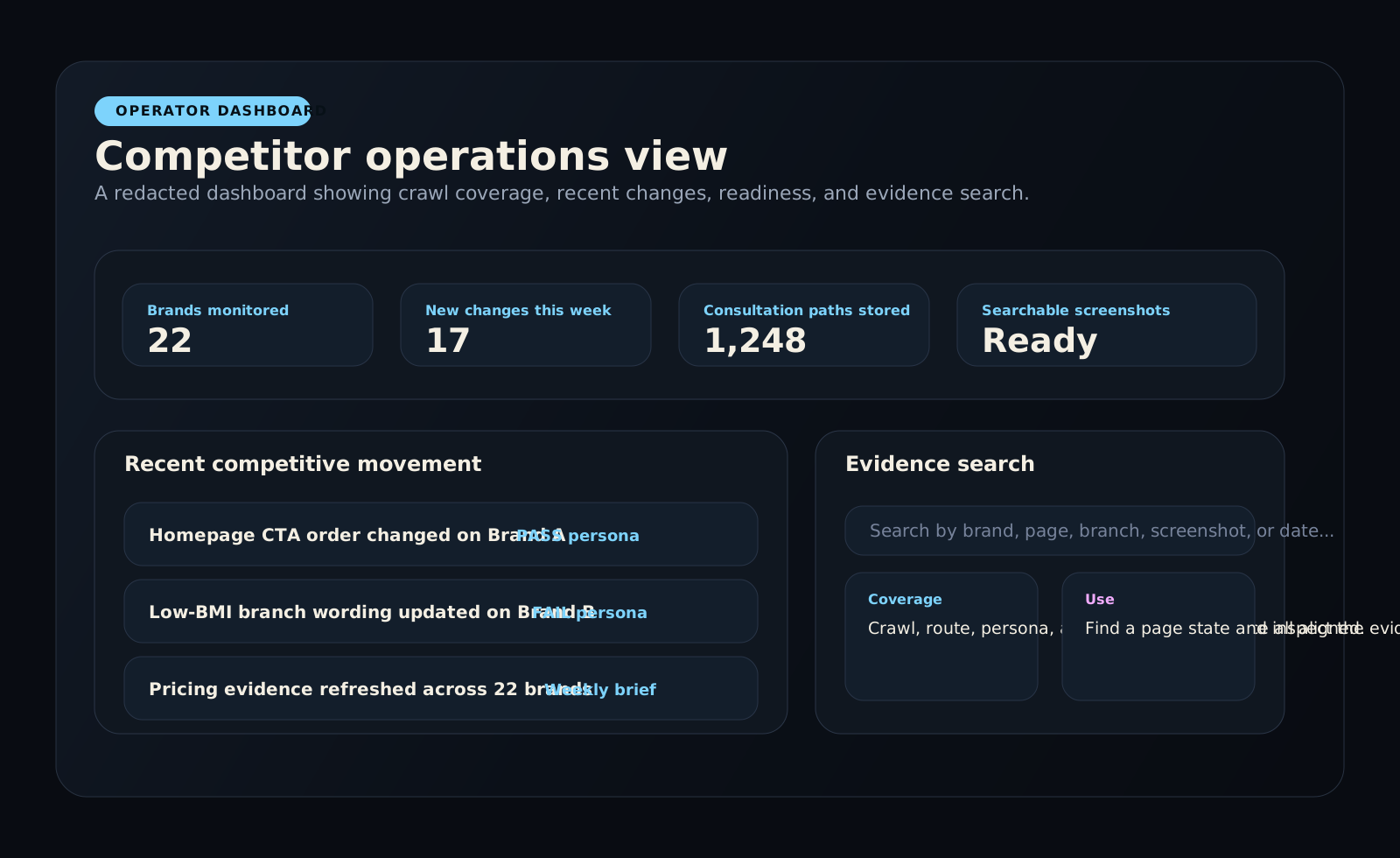
The result was a system that could answer questions like "what changed on Voy this week?" or "how does Numan handle a low-BMI branch?" with screenshots, route state, persona context, and stored evidence. The visuals below mix shipped screenshots with shareable summaries so the product can be shown without exposing private competitor detail.
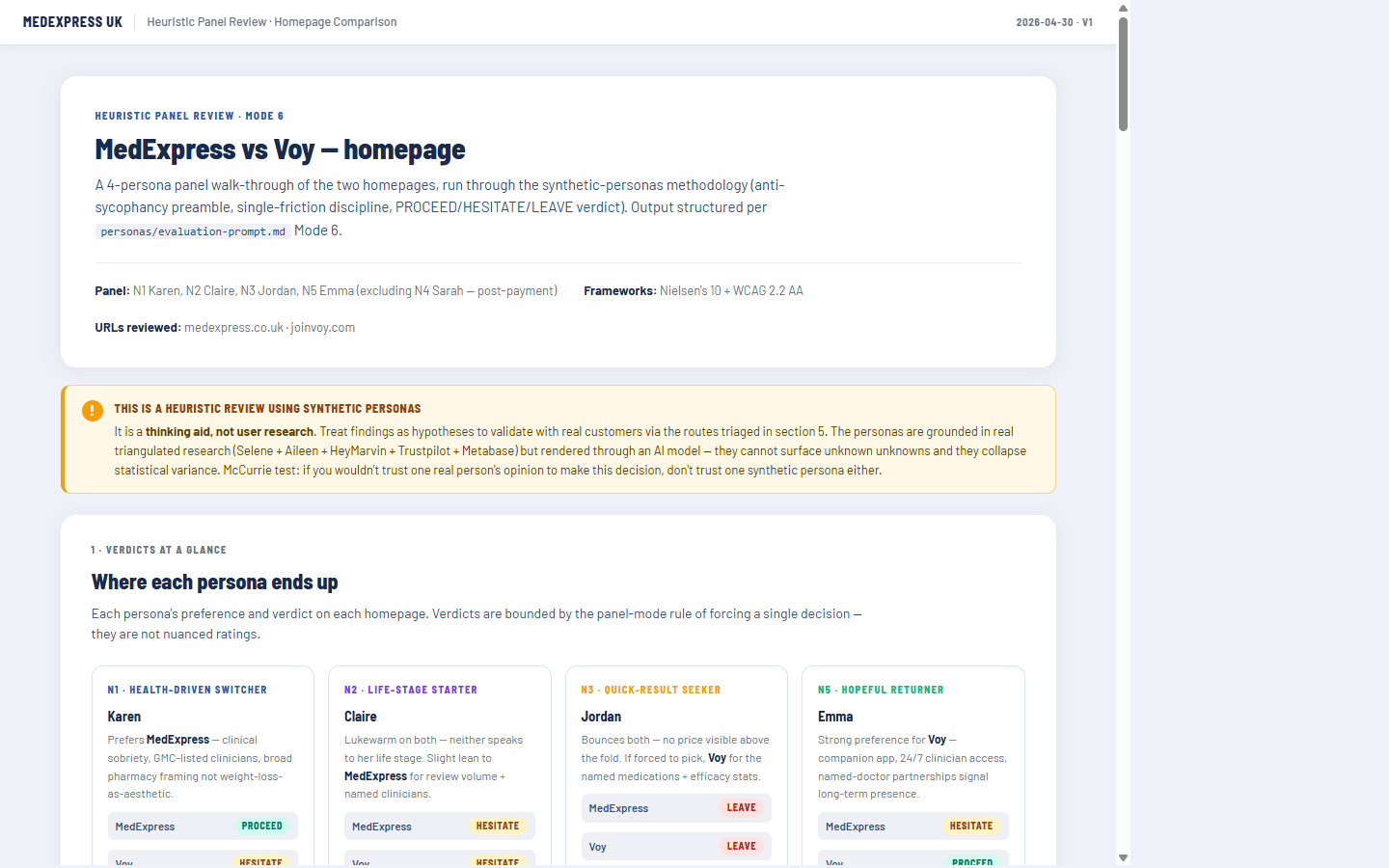
- Evidence first Criteria, screenshots, and verdict cards make the reasoning inspectable.
- Persona context The UI keeps branch intent visible, so a PASS or FAIL path is not mistaken for a generic browse.
- Reusable surface The same evidence framing can support product, pricing, and design review without rebuilding a deck.
Persist evidence before claims.
Screenshots, route edges, page states, answer maps, and timestamps sit behind every competitive conclusion.
Hash pages before asking Gemini.
The model is called only when a form signature is novel, keeping repeat crawls cheaper and easier to audit.
Use a readable operator UI.
Server-rendered HTML and vanilla JavaScript made the dashboard easier for a small internal audience to own.
Stop conditions are product requirements.
Payment and fake-submission boundaries are surfaced in the mechanism, not buried in policy notes.
My contribution
I set the operating model, review interface, and AI boundaries.
This was not a free-roaming browser bot. I shaped it as a product system with clear responsibility boundaries: structured automation for navigation and persistence, explicit personas for research intent, Gemini for novel form interpretation, and a dashboard for human review.
AI pairs helped write implementation, but I owned the problem framing, architecture, persona model, dashboard UX, anti-bot policy, ethical boundaries, and the decision to keep the human surface deliberately maintainable.
System shape
The system stored evidence first and surfaced it second.
The architecture favoured boring, inspectable choices: native Node HTTP, server-rendered HTML, vanilla JavaScript, raw SQL, Postgres for durable state, Redis for in-flight work, and Playwright for browser automation. The dashboard is an operator console over persisted facts, not a separate source of truth.
That mattered because the design goal was trust. A product team should be able to see the source screenshot, route edge, persona, branch path, model-solved answer map, and timestamp behind any competitive claim.
System 01
Personas made the journeys comparable.
The crawler uses PASS and FAIL personas rather than generic users. PASS personas traverse approval paths. FAIL personas deliberately trigger clinical gates such as low BMI, pancreatitis history, contraindications, underage status, or nitrate therapy.
Decoupling personas from individual sites made the system scalable. The same semaglutide PASS profile can walk MedExpress, Voy, Numan, Pharmacy2U, and other competitors, making differences in question order, eligibility logic, and rejection framing visible.
This is where product design and AI operations met. The personas had to be specific enough for a model to answer forms consistently, but explicit enough that a human reviewer could understand what branch the system was trying to observe. PASS and FAIL were research instruments, not claims about real patients.
System 02
Page hashes turned one-off form solving into reusable maps.
Every interactive page gets reduced to a canonical signature of labels, inputs, and buttons. The system hashes that signature and looks up an answer map for the competitor, vertical, and page hash. If the form is unchanged, it replays the cached action plan. If the form is novel, Gemini solves it once and the answer map is stored for future runs.
This made the system economically viable. Playwright navigation is cheap; model calls are not. The crawler asks the model only when the page materially changes, which is exactly when human attention is useful too.
It also made the AI behaviour explainable. Instead of asking Gemini to "crawl the site," the system asked a bounded question: given this form, this persona, and these boundary rules, which visible control should be used next? The returned answer became a reusable map, not a hidden chain of improvisation.
Design value
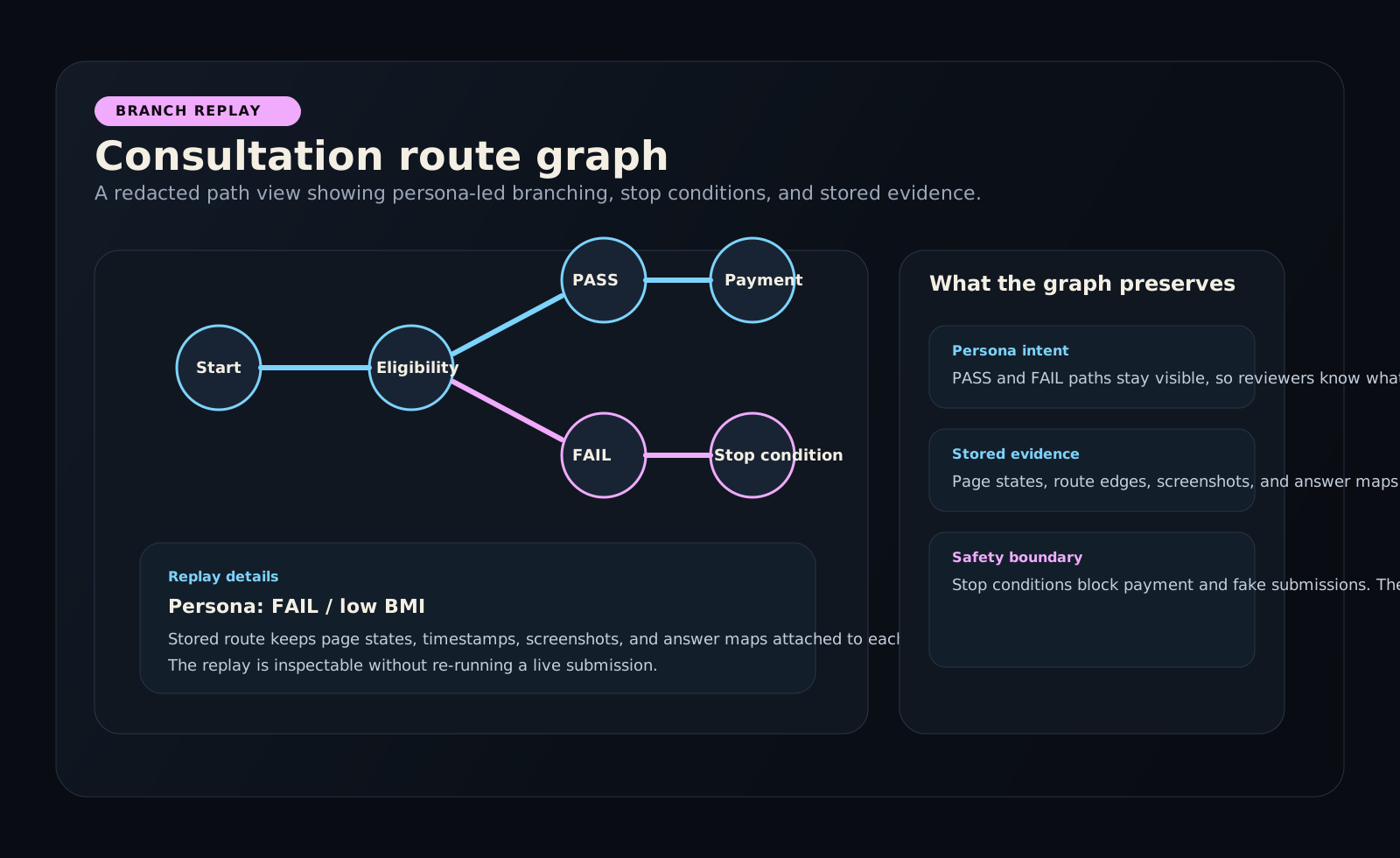
Because the system stores page states, route edges, consultation paths, branch points, and screenshots, competitor findings stop evaporating into chat threads. They become searchable product evidence.
System 03
Gemini handled novel forms inside a bounded workflow.
The model layer was designed as a specialist, not a supervisor. It received a cleaned representation of the current page, the active persona, treatment context, and explicit stop conditions. It returned structured actions that the crawler could validate, replay, and store.
This let the system handle messy real-world healthcare forms without hard-coding every label variant. The model could interpret that "Do you have a history of pancreatitis?" and "Have you ever had pancreas inflammation?" were equivalent for the persona, while the structured automation layer still controlled navigation, persistence, retries, and boundary enforcement.
- 01
Extract labels, inputs, buttons, and visible context from the current page.
- 02
Hash the interaction signature and check whether a validated answer map already exists.
- 03
If novel, ask Gemini for a structured action plan under persona and boundary constraints.
- 04
Replay, store, and expose the answer map so future runs are cheaper and more inspectable.
System 04
Safety boundaries were built into the mechanism.
Two ethical boundaries shaped the architecture. The crawler does not submit fake medical intake to real prescribers, and it does not click payment buttons. Consultation branch replay lets the system return to stored branch points and explore alternatives without repeatedly pushing fake profiles through live prescriber workflows. Payment-boundary detection stops on pricing and billing surfaces without crossing into purchase.
I treated those boundaries as product requirements, not legal footnotes. The dashboard needed to show where the crawler stopped and why. The operator model needed cooldowns, review points, and anti-bot handling. The data model needed enough state to compare competitor behaviour without creating unsafe submissions.
- 01
Capture the visible form and available branches.
- 02
Persist the action path and branch alternatives.
- 03
Replay stored state to a known branch point.
- 04
Explore the alternative branch inside the bounded workflow.
Outcome
Competitor intelligence became refreshable evidence for design.
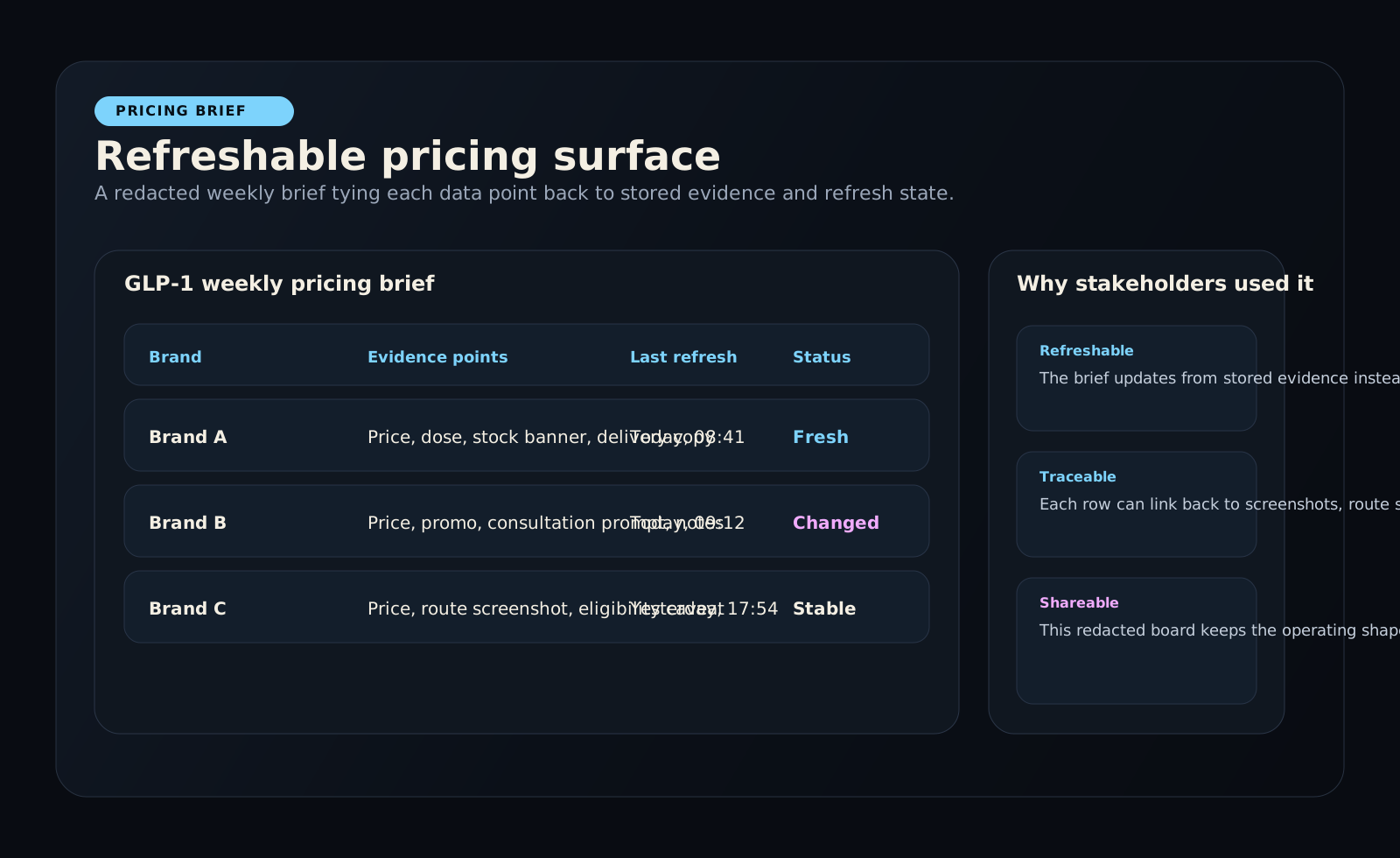
The system produced a 22-brand UK GLP-1 pricing competitive analysis with evidence per data point, rendered as stakeholder-friendly HTML and refreshable by supervisor command.
The dashboard gives designers and PMs access to crawl coverage, recent changes, route graphs, consultation branches, screenshot search, and competitor readiness without touching a CLI.
The same plan pattern from the MedExpress knowledge work carried over here, allowing multiple AI coding harnesses to work safely on documented phases.
The AI layer stayed useful because it was narrow. Gemini handled novel form interpretation; deterministic code handled repeatability, state, and boundaries; the dashboard made the intelligence usable by the product team.
Reflection
What I would improve next.
Bring multi-site expansion forward
The system became much more valuable once the 20-site expansion landed because comparison, not crawling alone, is the product value.
Score model decisions over time
I would add evals for answer-map accuracy, stop-boundary detection, and branch-selection confidence so the model layer can be monitored like product behaviour.
Add cross-competitor flow diffs
The natural next step is side-by-side comparison of equivalent gate questions, rejection screens, pricing states, and safety boundaries.